
Chair
Rachel Wynberg
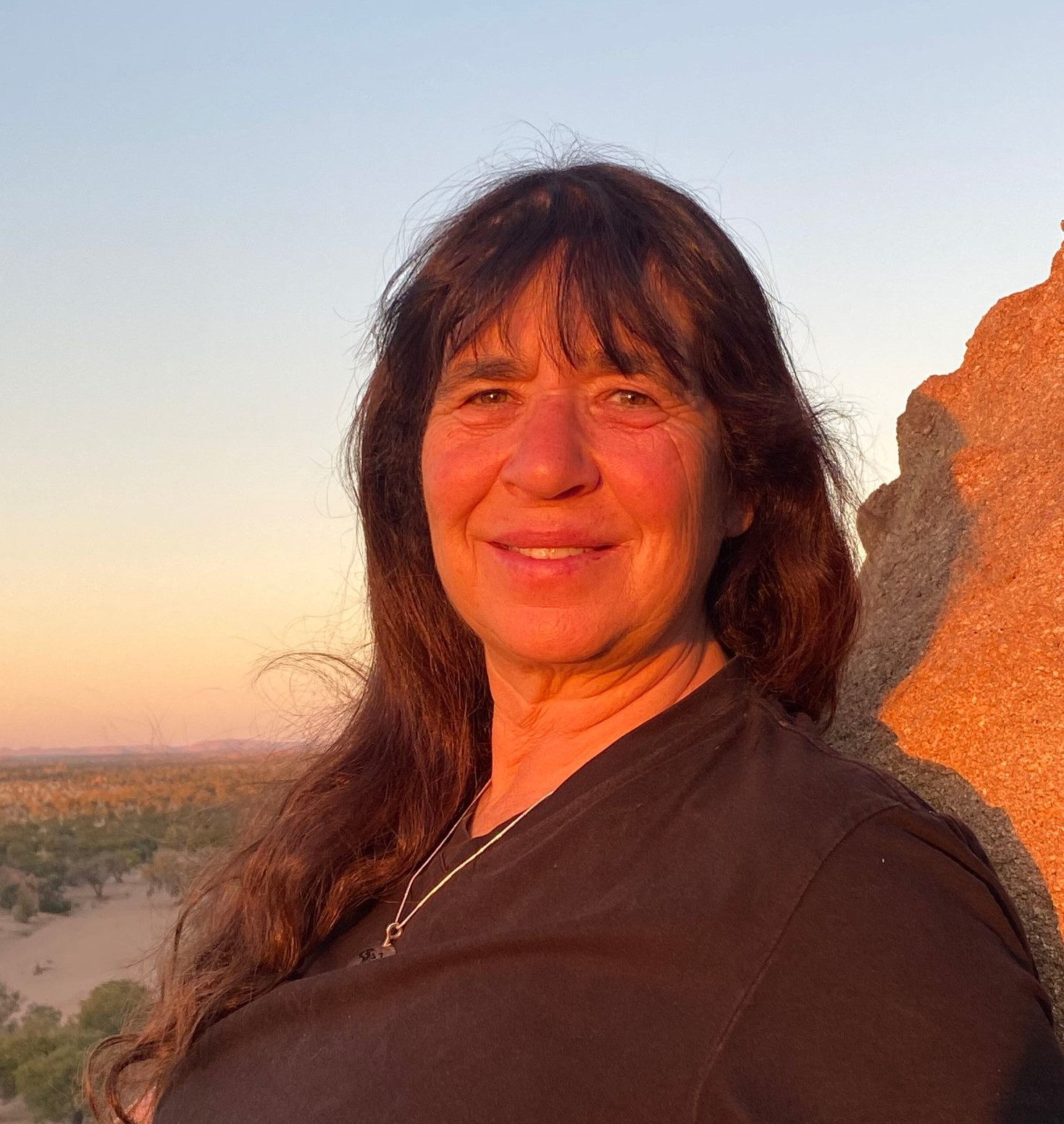
DST/NRF Bio-Economy Chair and Professor in the Department of Environmental and Geographical Sciences
rachel.wynberg@uct.ac.za
+27 21 650 2866

Rachel Wynberg is an academic and policy analyst with a special interest in bio-politics and the biodiversity-based economy, access and benefit sharing, and agroecology. She is a Professor in the Department of Environmental and Geographical Science at UCT, and holds a national Research Chair on Social and Environmental Dimensions of the Bioeconomy. With a background in the natural and social sciences, she has a strong interest in trans and inter-disciplinarity and policy engagement across the humanities, arts and sciences.
Over the past twenty years Professor Wynberg has advised governments, civil society organisations and international agencies, and continues to be actively involved with policy debates and civil society movements in southern Africa, serving on the board and as a founding member of Biowatch South Africa. She is an elected member of the Academy of Science in South Africa, and was a member of the High Level Panel for a Sustainable Ocean Economy (HLP) Expert Group and a lead author for the Intergovernmental Science-Policy Platform on Biodiversity and Ecosystem Services (IPBES) Sustainable Use assessment. Over the past ten years she has reviewed articles for more than 50 journals across a range of disciplines. She is also a Board member of the Union for Ethical Biotrade (Netherlands) and represents UCT on the Bioprospecting Forum of the South African government.
As part of her Research Chair, she supervises a team of over 25 Masters and PhD students and postdoctoral fellows working on a range of issues across the bio-economy sphere, to date graduating some fifty postgraduate students. Her work is embedded in engaged scholarship, seeking to build a team of socially conscious researchers that engages critically, inclusively and effectively with the inter-connected themes incorporated under her Chair. She aims to carry through principles of engaged scholarship to the production of socially robust and scientifically rigorous research that matters, that addresses social and environmental justice, and that values the architectures of different knowledge systems.
Professor Wynberg’s professional research appointments for the past ten years include several commissioned studies on the way in which different sectors and industries use and trade biodiversity and genetic resources; studies commissioned by the Convention on Biological Diversity on access and benefit sharing, digital sequence information, and equity; collaboration on DIVERSIFARM, a project exploring agrobiodiversity and farmers’ rights; participation as the Global South partner in RE4GREEN. Research Ethics and integrity for the GREEN transition in Europe; co-lead for a Blue Paper on the Ocean Genome for the High Level Panel for a Sustainable Ocean Economy; numerous research and training projects on access and benefit sharing across varied resources and multilateral international agreements; long-term collaborations on agroecology, seed, knowledge and Farmers’ Rights; work on equitable research partnerships; and research on benefit sharing.
She is a founding member of a long-term collaboration on Seed and Knowledge (SKI) – a dynamic partnership of diverse southern African organisations, including UCT, that is committed to securing food sovereignty in the region. SKI works with smallholder farmers to become more seed, food and nutritionally secure through farmer-led seed systems, improved crop diversity, and the revival of local knowledge systems.
She also represents UCT as consortium lead in the Research for Agroecology Network Southern Africa (RAENS), a EU funded project coordinated by the Centre for Coordination of Agricultural Research and Development for Southern Africa (CCARDESA) that involves a group of eight implementing partners aiming to establish a robust, innovative, and sustainable multi-actor transdisciplinary agroecology research and knowledge network in Southern Africa.
Professor Wynberg is co-Director of Voices for BioJustice, a collaborative initiative developing innovative approaches to build capacity and facilitate the direct, substantive and authentic contributions of local groups to policy design and implementation. She is a co-lead of Rethinking Access and Benefit Sharing, an initiative that aims to bring about systemic change to address inequities and unethical behaviour in the commercial use of biodiversity, strengthen biodiversity research, catalyse change to strengthen conservation efforts and reduce biodiversity loss, and bring about social justice and increased benefits for Indigenous peoples and local communities (IPLCs) and traditional knowledge holders.
Professor Wynberg is rated by South Africa’s National Research Foundation as an internationally recognised researcher (B1). Her publications include over 120 scientific papers, 90 technical reports and 70 popular articles, and seven edited books and monographs. Her research outputs range from conceptual and theoretical frameworks, to review articles and those consolidating global case studies, contributions based on empirical data, and practical and grounded research outputs that are accessible to varied actors in the bio-economy, including policy-makers. Further information can be found at: https://www.researchgate.net/profile/Rachel_Wynberg
Linkedin: https://www.linkedin.com/in/rachel-wynberg-93062650/
QUALIFICATIONS:
PhD Environmental Science, University of Strathclyde
MPhil Environmental Science, University of Cape Town
MSc Marine Biology, University of Cape Town
BSc Honours Zoology, University of Cape Town


 Taryn de Beer’s Masters thesis was titled “Stakeholder involvement in the development of genetically modified (GM) food labelling policy in South Africa”.
 Stephanie Joos-Vandewalle’s Masters thesis was titled “The effects of urbanisation on non-timber forest product dependencies: A case study of three settlements in the Chobe district of northern Botswana”.
 John Wilson’s Masters thesis was titled “The benefits and burdens of living beside the Cederberg Wilderness Area”.
 Helen Mahlase’s Masters thesis was titled “Exploring the uptake of genetically modified white maize by smallholder farmers: The case of Hlabisa, South Africa”.
 Claudette Muller’s Masters thesis was titled “The role of buchu (Agathosma betulina and Agathosma crenulata) cultivation in livelihoods and conservation”.
 Bonnie Galloway’s Masters thesis was titled “Impacts of commercialising Commiphora wildii in two conservancies in North Western Namibia”.
 Andrew Reid’s Masters thesis was titled “Rastas on the road to healing: Plant-human mobilities in Cape Town, South Africa”.


 skyrumbie@yahoo.co.uk