
Research Themes


How we work
Our research approach is critical of the systems that thwart social justice, and mindful of the architectures of different knowledge systems and multiple ways of knowing. Our methodologies are designed to be respectful of participants’ dignity and privacy, and supportive of mutual values such as honesty, care and fairness.
Engaged scholarship is an underlying principle of our work: we have a strong focus on ethical and meaningful community and civil society engagement which is mutually beneficial; we actively pursue research projects that address poverty, inequality and social injustice; we use these experiences to inform policymakers and to train students; and we bring rigour to these findings through peer-reviewed publications, and by imbuing a deeper and more dynamic research culture within the university. We aim to share research results in a timely manner and in a format that is relevant and useful to government, civil society, industry and local communities.
NEWS

Whose Seed is it, Anyway? Rethinking Namibia’s Pearl Millet Seed System
Pearl millet, locally known as Mahangu, is more than a crop in Namibia....
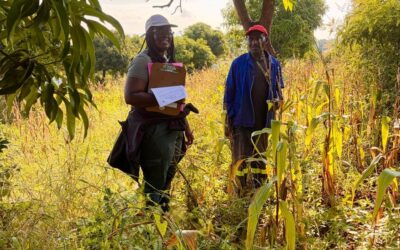
When I Put My Notebook Down: Lessons from Listening to Farmers
This reflection is drawn from my fieldwork on pest and disease literacy...
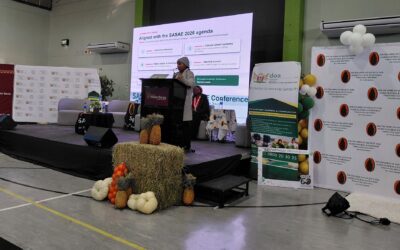
Networking at the 59th Conference of the South African Society for Agricultural Extension
At the end of June 2026, I set off to KuGompo City (formerly known as...
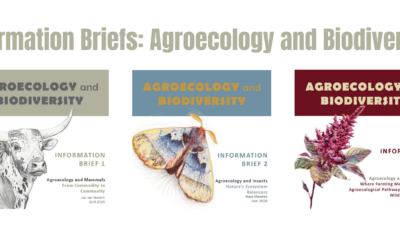
Introducing Three Information Briefs on Agroecology and Biodiversity
With support from the Seed and Knowledge Initiative (SKI), members of the...

Water Works: On Knowing, Being, and Doing in an Unfamiliar Place
Often on a weekend here in Cape Town, I will head to the beach, book in...

WEBINAR: Data and Knowledge Sovereignty in the Bioeconomy
WEBINAR: Data and Knowledge Sovereignty in the Bioeconomy
Post-capitalist and just approaches in biodiversity use and agriculture
18 May 16:30 – 18:30 CET
LONG-TERM COLLABORATIONS
The Seed and
Knowledge Initiative


 Taryn de Beer’s Masters thesis was titled “Stakeholder involvement in the development of genetically modified (GM) food labelling policy in South Africa”.
 Stephanie Joos-Vandewalle’s Masters thesis was titled “The effects of urbanisation on non-timber forest product dependencies: A case study of three settlements in the Chobe district of northern Botswana”.
 John Wilson’s Masters thesis was titled “The benefits and burdens of living beside the Cederberg Wilderness Area”.
 Helen Mahlase’s Masters thesis was titled “Exploring the uptake of genetically modified white maize by smallholder farmers: The case of Hlabisa, South Africa”.
 Claudette Muller’s Masters thesis was titled “The role of buchu (Agathosma betulina and Agathosma crenulata) cultivation in livelihoods and conservation”.
 Bonnie Galloway’s Masters thesis was titled “Impacts of commercialising Commiphora wildii in two conservancies in North Western Namibia”.
 Andrew Reid’s Masters thesis was titled “Rastas on the road to healing: Plant-human mobilities in Cape Town, South Africa”.


 skyrumbie@yahoo.co.uk